 Image 1 of 3
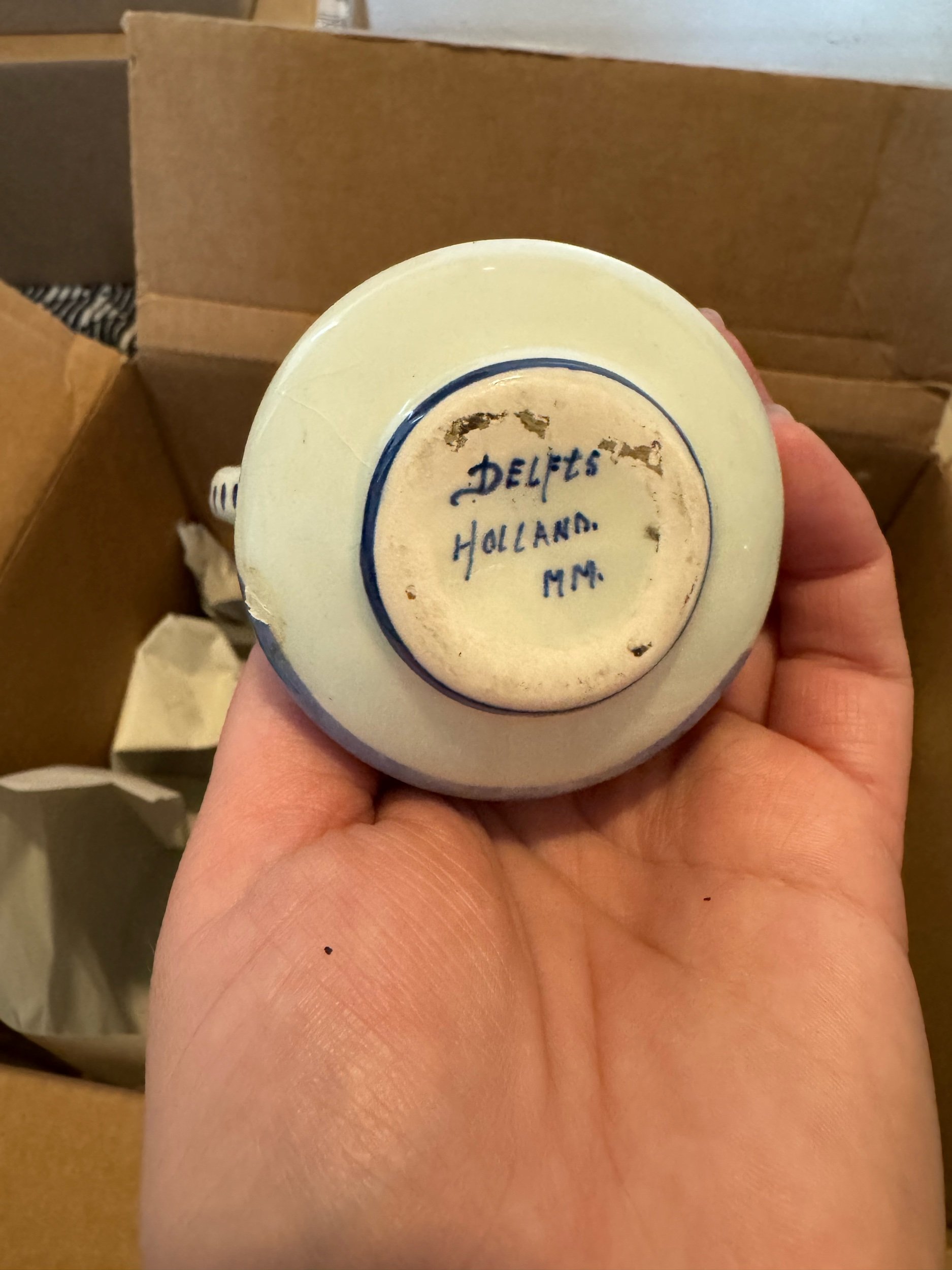 Image 2 of 3
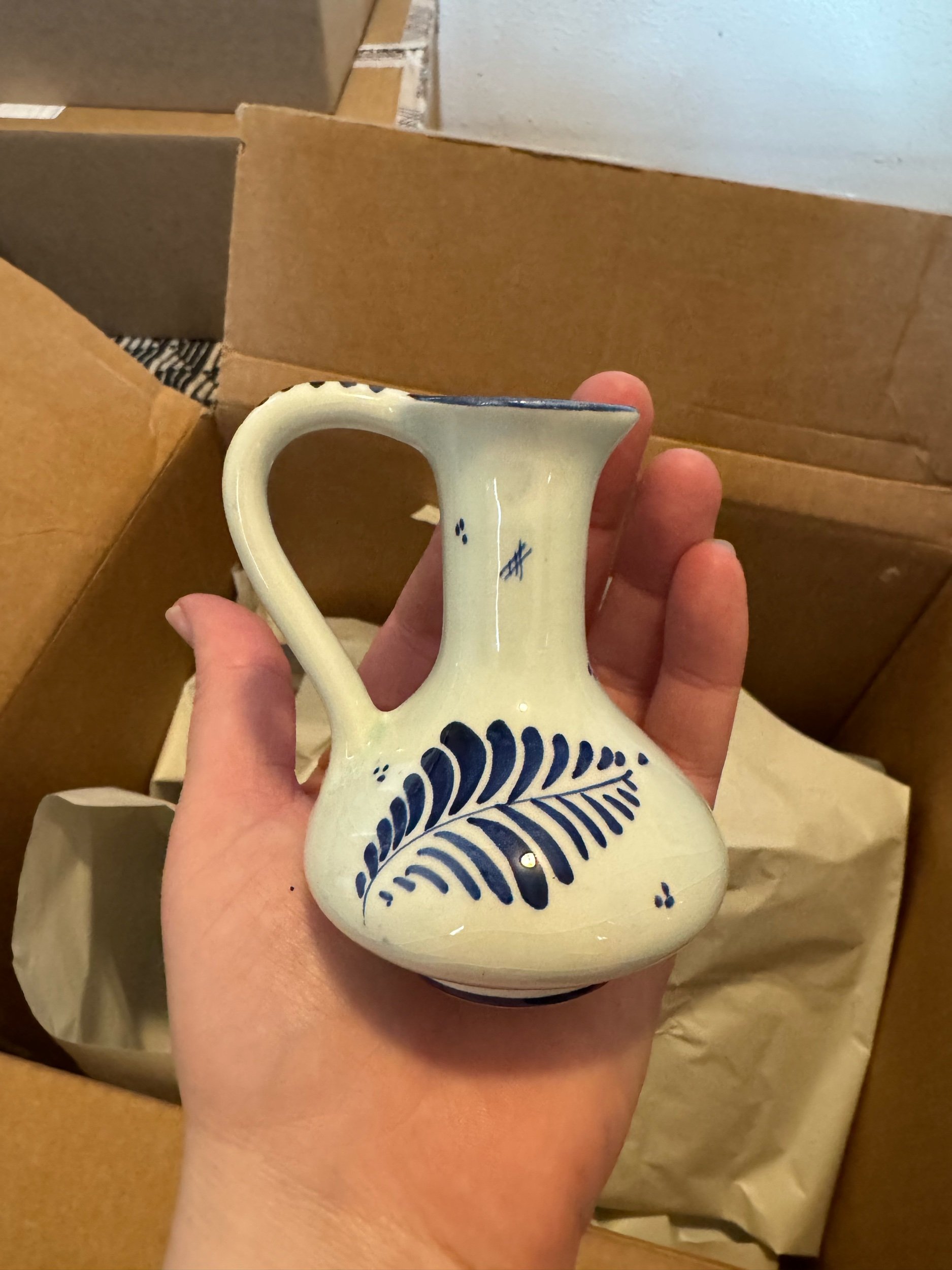 Image 3 of 3
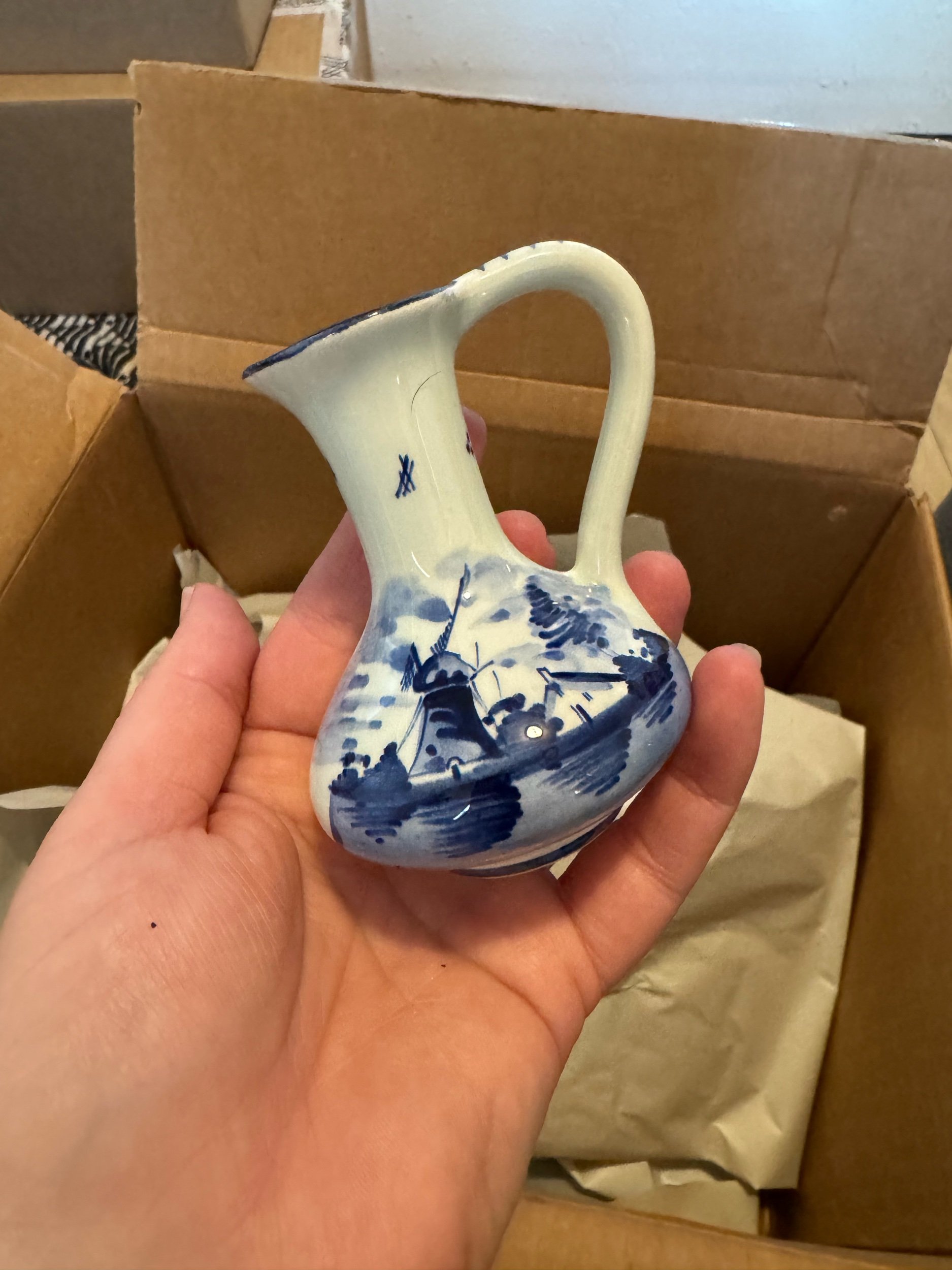
Design: A traditional Dutch windmill and landscape scene.
Origin: Most are "Made in Holland" (Netherlands) and often include a factory mark, item number, or artist's initials on the bottom.
Material: Glazed ceramic, clay, or porcelain.
Common Use: Decorative accent, small creamer, or bud vase.
Based on the handwritten markings on the base, this item is a piece of
modern hand-painted Delftware from the Netherlands.
🔍 Breakdown of the Markings
The markings are consistent with typical 20th-century artisanal Dutch pottery:
"Delfts": Refers to the style of the decoration (blue on white). While "Delft" originally referred only to items made in the city of Delft, it is now commonly used for any pottery made in this traditional Dutch style.
"Holland": Confirms the geographic origin. Authentic pieces intended for export or the modern market often include the country name in English.
"MM": These are the initials of the individual painter who decorated the piece. In hand-painted workshops, artists signed their work to indicate it was not mass-produced.
💡Key Identification Tips
Authenticity: The presence of handwritten marks, rather than a stamp, indicates this is a genuine hand-painted piece. However, it is not "Royal Delft" (De Porceleyne Fles), as that specific factory uses a trademark bottle icon and "JT" initials.
Age: This style of handwriting and the use of "Holland" suggests it was likely produced in the mid-to-late 20th century.
Condition: The visible yellow clay where the glaze has chipped is a hallmark of traditional earthenware; the white "tin glaze" sits on top of a yellow or reddish clay base.
Consulting the Royal Delft (De Porceleyne Fles) painter database, which maintains the most comprehensive records of Dutch Delftware decorators since 1876, several painters with the initials "MM" or related variations are listed.
🎨 Potential Painter Matches
The following artists are documented by the Royal Delft Museum with initials matching your piece:
M.M. Fekkes: A female painter active from 1968 to 1970.
M.M. Fourie: A female painter active from 2001 to 2003.
M.M. v.d. Berg: A painter listed in the museum's historical records, though their exact active years are not specified in the current public summary.
🔍 Identification Context
It is important to note that while these painters worked for the prestigious Royal Delft factory, your piece's mark—"Delfts Holland"—is a more generic artisan mark rather than the official Royal Delft trademark (which includes a bottle icon and stylized "JT" initials).
In the 20th century, many smaller studios in the Netherlands produced hand-painted ware in the Delft style, often using the same pool of trained ceramic artists who might move between workshops. The "MM" on your piece most likely refers to an individual artisan from one of these high-quality smaller studios active in the mid-to-late 20th century.
Based on a closer comparison of the handwritten markings and style, your piece is identified as a
hand-painted Delft Blue sugar bowl (missing its lid) or a similar small lidded jar, typically produced in the mid-20th century.
🔍 Signature and Origin Insights
While "MM" corresponds to individual painters in larger databases like Royal Delft, the specific cursive handwriting on your piece—particularly the "f" in "Delfts"—is a strong match for Kunstaardewerkfabriek "Quo Vadis" in Gouda, Netherlands.
Workshop: Quo Vadis was a medium-sized pottery factory that specialized in decorative Delftware from 1947 to 1969.
Design: A traditional Dutch windmill and landscape scene.
Origin: Most are "Made in Holland" (Netherlands) and often include a factory mark, item number, or artist's initials on the bottom.
Material: Glazed ceramic, clay, or porcelain.
Common Use: Decorative accent, small creamer, or bud vase.
Based on the handwritten markings on the base, this item is a piece of
modern hand-painted Delftware from the Netherlands.
🔍 Breakdown of the Markings
The markings are consistent with typical 20th-century artisanal Dutch pottery:
"Delfts": Refers to the style of the decoration (blue on white). While "Delft" originally referred only to items made in the city of Delft, it is now commonly used for any pottery made in this traditional Dutch style.
"Holland": Confirms the geographic origin. Authentic pieces intended for export or the modern market often include the country name in English.
"MM": These are the initials of the individual painter who decorated the piece. In hand-painted workshops, artists signed their work to indicate it was not mass-produced.
💡Key Identification Tips
Authenticity: The presence of handwritten marks, rather than a stamp, indicates this is a genuine hand-painted piece. However, it is not "Royal Delft" (De Porceleyne Fles), as that specific factory uses a trademark bottle icon and "JT" initials.
Age: This style of handwriting and the use of "Holland" suggests it was likely produced in the mid-to-late 20th century.
Condition: The visible yellow clay where the glaze has chipped is a hallmark of traditional earthenware; the white "tin glaze" sits on top of a yellow or reddish clay base.
Consulting the Royal Delft (De Porceleyne Fles) painter database, which maintains the most comprehensive records of Dutch Delftware decorators since 1876, several painters with the initials "MM" or related variations are listed.
🎨 Potential Painter Matches
The following artists are documented by the Royal Delft Museum with initials matching your piece:
M.M. Fekkes: A female painter active from 1968 to 1970.
M.M. Fourie: A female painter active from 2001 to 2003.
M.M. v.d. Berg: A painter listed in the museum's historical records, though their exact active years are not specified in the current public summary.
🔍 Identification Context
It is important to note that while these painters worked for the prestigious Royal Delft factory, your piece's mark—"Delfts Holland"—is a more generic artisan mark rather than the official Royal Delft trademark (which includes a bottle icon and stylized "JT" initials).
In the 20th century, many smaller studios in the Netherlands produced hand-painted ware in the Delft style, often using the same pool of trained ceramic artists who might move between workshops. The "MM" on your piece most likely refers to an individual artisan from one of these high-quality smaller studios active in the mid-to-late 20th century.
Based on a closer comparison of the handwritten markings and style, your piece is identified as a
hand-painted Delft Blue sugar bowl (missing its lid) or a similar small lidded jar, typically produced in the mid-20th century.
🔍 Signature and Origin Insights
While "MM" corresponds to individual painters in larger databases like Royal Delft, the specific cursive handwriting on your piece—particularly the "f" in "Delfts"—is a strong match for Kunstaardewerkfabriek "Quo Vadis" in Gouda, Netherlands.
Workshop: Quo Vadis was a medium-sized pottery factory that specialized in decorative Delftware from 1947 to 1969.